Bariatric and metabolic surgery
Sleeve gastrectomy and gastric bypass, with care that continues long after surgery.
Obesity is a chronic disease, not a failure of willpower. Treating it well takes more than a single operation. It takes the right procedure, careful preparation, and a team that stays with you for the years that follow.
Longitudinal care, not a single operation.
Dr. Samakar is Director of the Metabolic and Bariatric Surgery Program at Keck Medicine of USC and Surgical Director of the USC Weight Management Center at the USC Digestive Health Institute. He offers the full spectrum of bariatric surgery, from first-time sleeve gastrectomy and gastric bypass to complex revisional surgery.
Our approach is longitudinal: we care for you before, during, and long after surgery. Through the USC Weight Management Center, you have access to surgeons, obesity medicine specialists, bariatric endoscopists, endocrinologists, dietitians, and behavioral health clinicians, so your treatment can adapt as your needs change over time.
The Keck Medicine of USC bariatric surgery program is accredited by the Metabolic and Bariatric Surgery Accreditation and Quality Improvement Program (MBSAQIP), the national accreditation standard for bariatric surgery.
Who may benefit from bariatric surgery
Current guidelines from the American Society for Metabolic and Bariatric Surgery generally support surgery for adults with a BMI of 35 or higher, and for those with a BMI of 30 or higher who have metabolic conditions such as type 2 diabetes. Lower thresholds may apply for people of Asian descent. Insurance requirements are often stricter and vary by plan; we accept most insurance plans. There is no age requirement: adolescents and older adults are evaluated individually.
Not sure of your BMI? Use the NIH BMI calculator.
Beyond weight loss, surgery may improve or resolve weight-related conditions, including:
Often improves significantly, sometimes allowing patients to reduce or stop medications.
May improve as weight decreases.
Often improves with weight loss.
May improve with sustained weight loss.
Less weight on the joints can make activity easier.
Formerly called polycystic ovary syndrome (PCOS). Weight loss may improve hormone balance, menstrual regularity, and fertility.
Long-term studies link bariatric surgery with a lower risk of several obesity-related cancers.
Weight loss and metabolic improvements are associated with lower cardiovascular risk and lower overall mortality in people with severe obesity.
Results vary from person to person. During your evaluation, we discuss realistic goals and the risks and benefits for your situation.
Do you need to lose weight before another surgery or treatment?
Sometimes weight loss is a step toward a larger goal. Surgeons and transplant programs often set a weight or BMI target before they will proceed, because excess weight can increase the risk of complications. Our program works with you, and with your other doctors, to reach those goals safely, using medical weight management, nutrition support, or bariatric surgery when appropriate, so you can move forward with the care you need.
Knee, hip, or spine surgery may be postponed until you reach a weight goal set by your orthopedic surgeon. We help you get there.
Weight goals are often part of transplant candidacy. We care for patients preparing for transplant and for patients after transplant.
Reaching a healthier weight before a complex hernia repair can lower the risk of complications and recurrence. Learn more
For some patients with heart failure, weight loss may ease symptoms and is part of becoming eligible for advanced heart therapies.
Weight management can be an important part of long-term health after cancer treatment.
Weight loss may also be recommended before other procedures or to improve other conditions. We tailor the plan to your goal.
Each pathway is coordinated with your other specialists, so every step is planned around your larger goal.
Bariatric procedures we offer
Most bariatric operations are performed laparoscopically or robotically through small incisions.
Sleeve gastrectomy
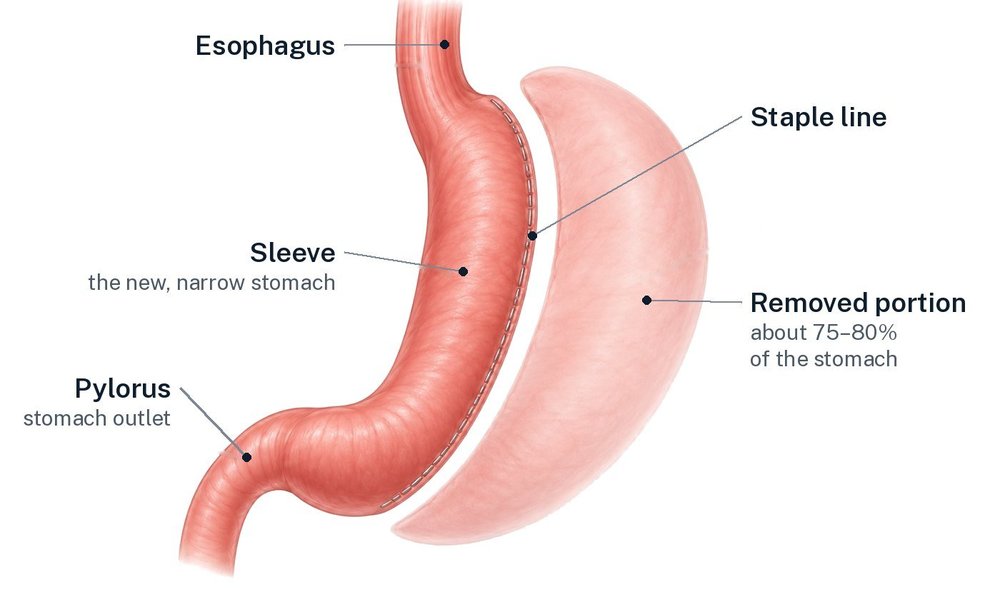
About three-quarters of the stomach is removed, leaving a narrow, banana-shaped stomach. The smaller stomach holds less food, and changes in gut hormones reduce hunger.
It is the most commonly performed bariatric operation. Because it can cause or worsen reflux in some patients, existing reflux is an important factor in choosing it.
Roux-en-Y gastric bypass
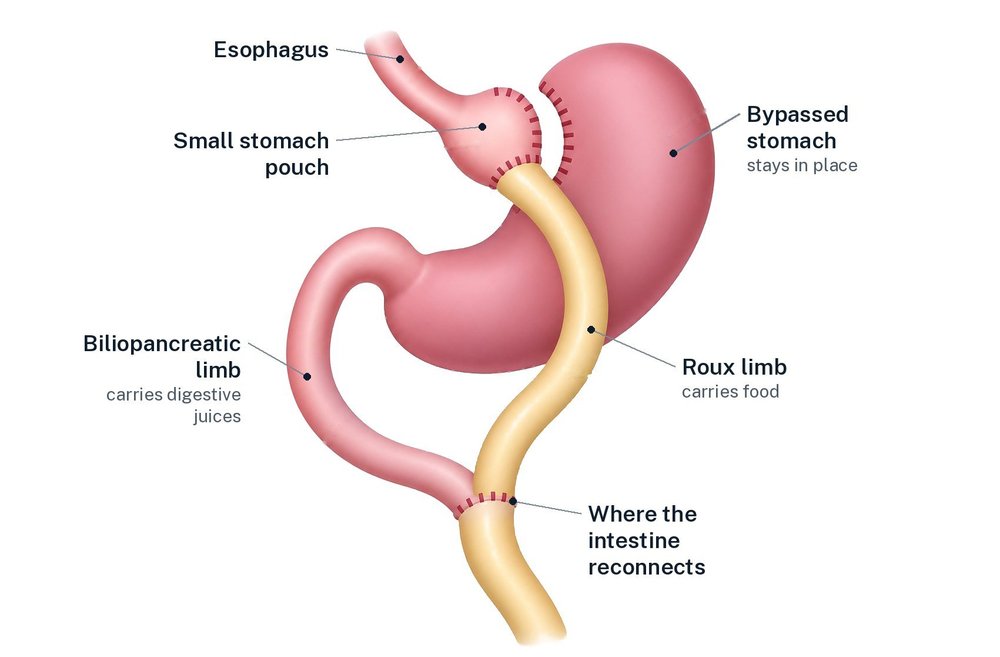
A small stomach pouch is created and connected directly to the small intestine, bypassing most of the stomach and the first part of the intestine.
Gastric bypass is often a strong option for patients with significant reflux or type 2 diabetes. It requires lifelong vitamin supplementation and follow-up.
Revisional bariatric surgery
For patients with weight regain, reflux, or complications after a previous weight-loss operation, revisional surgery is a major focus of Dr. Samakar’s practice.
The best operation depends on your BMI, health conditions, reflux, medications, previous surgery, and personal goals. You may also hear about other operations, such as SADI-S or the duodenal switch. Dr. Samakar is happy to discuss how they compare and whether they make sense for you.
Medications, endoscopy, and surgery working together
Treatment for obesity is not one-size-fits-all. GLP-1 and related medications have become an important part of care. Some patients do well with medication alone, while others benefit from surgery, and medications can also be used before or after surgery to support long-term results.
Through the USC Weight Management Center, we offer the full range of obesity care: medications including GLP-1s, weight-loss therapy, lifestyle redesign, support groups, endoscopic procedures performed by bariatric endoscopists, and surgery. If surgery is not the right choice for you now, we can help you find the treatment that is.
What to expect
Bariatric surgery is a process, and each step prepares you for the next.
A review of your health, weight history, previous treatments, and goals, in person or by telemedicine.
Nutrition counseling, behavioral health evaluation, medical testing, and insurance approval as needed.
Most patients stay in the hospital one night. Recovery at home typically takes a few weeks, with a gradual return to regular foods.
Close follow-up with the surgical and nutrition team as your diet advances and your body adjusts.
Support groups, nutrition guidance, and medical management as needed, including weight-loss medications, to help you adjust and maintain your progress.
Regular visits, lab monitoring, and vitamin supplementation, for life. If weight regain or other problems develop, we address them early.
Bariatric surgery for adolescents
Severe obesity in adolescence can affect health for decades. Dr. Samakar is Surgical Director of the bariatric surgery program at Children’s Hospital Los Angeles (CHLA), one of only eight pediatric centers in the nation recognized by the American College of Surgeons through MBSAQIP, and one of the largest pediatric bariatric surgery programs in the country. Teens are evaluated and cared for by a team experienced in treating young patients and supporting their families.
Frequently asked questions
Does insurance cover bariatric surgery?
We accept most insurance plans. Many plans cover bariatric surgery when specific criteria are met, which may include BMI requirements, documented medical conditions, and a supervised preparation program. Requirements vary by plan, and our team can help you understand yours.
Is there an age limit?
No. There is no strict age requirement. Adolescents and older adults are evaluated individually, based on overall health, goals, and the risks and benefits of treatment.
Which operation is best?
There is no single best operation. The choice depends on your BMI, health conditions, reflux, medications, previous surgery, and goals. Dr. Samakar will explain the options and help you decide.
Will I need vitamins after surgery?
Yes. All bariatric operations require lifelong vitamin and mineral supplementation and periodic lab monitoring. Requirements are greater after gastric bypass.
Can I take GLP-1 medications after surgery?
Yes, in some cases. Medications may be used after surgery to help with weight regain or to support results, as part of your long-term care plan.
What if I regain weight after a previous surgery?
Weight regain is common and treatable. Options may include nutrition and behavioral support, medications, endoscopic procedures, or revisional surgery. Learn more about revisional surgery.
Can I be seen by telemedicine?
Yes. Dr. Samakar holds a weekly telemedicine clinic, so many visits before and after surgery can happen from home. This is especially helpful for patients who live far from Los Angeles.
Take the next step.
Whether you are considering surgery for the first time, comparing your options, or looking for long-term support, Dr. Samakar can help you understand what is right for you. Call to schedule a consultation in Los Angeles, Glendale or Pasadena, or by telemedicine.